Clinical Teams Can Move Beyond Note-Taking Burdens
Documentation pressure often grows as your year-end workload, staffing plans, and upcoming operational priorities come into focus. For many of your clinical teams, the work does not end when the patient encounter ends. Legacy dictation can turn spoken words into text, yet your clinicians may still need to work through templates, organize details, edit language, and finish notes later.
We see a clinical AI documentation platform as a more workflow-centered option for your teams. Rather than focusing only on transcription, AI-assisted documentation can help create usable draft notes while keeping clinician judgment, review, and accountability at the center of the final record. Below, we explain how this approach differs from traditional dictation, where Microsoft Dragon Copilot fits, and why you should consider documentation alongside privacy and drug diversion monitoring.
Why Legacy Dictation Can Create Documentation Drag
Speech-to-text can be helpful, but recording words is not the same as supporting your full documentation process. In a traditional dictation workflow, your clinicians may still need to decide where information belongs, locate the right fields, reconcile details from the encounter, and make sure the record clearly reflects what happened.
That extra work can create friction, especially when your documentation process does not match the natural flow of care. Depending on your workflow, your clinical teams may run into challenges such as:
- Notes that remain unfinished until later in the day
- Repetitive edits to shape dictated text into a complete note
- Inconsistent note structure across encounters or users
- Administrative work that follows clinicians after scheduled hours
None of these concerns applies to every team or every workflow. Still, when documentation feels like a second shift for your clinicians, it can add mental load to an already demanding day.
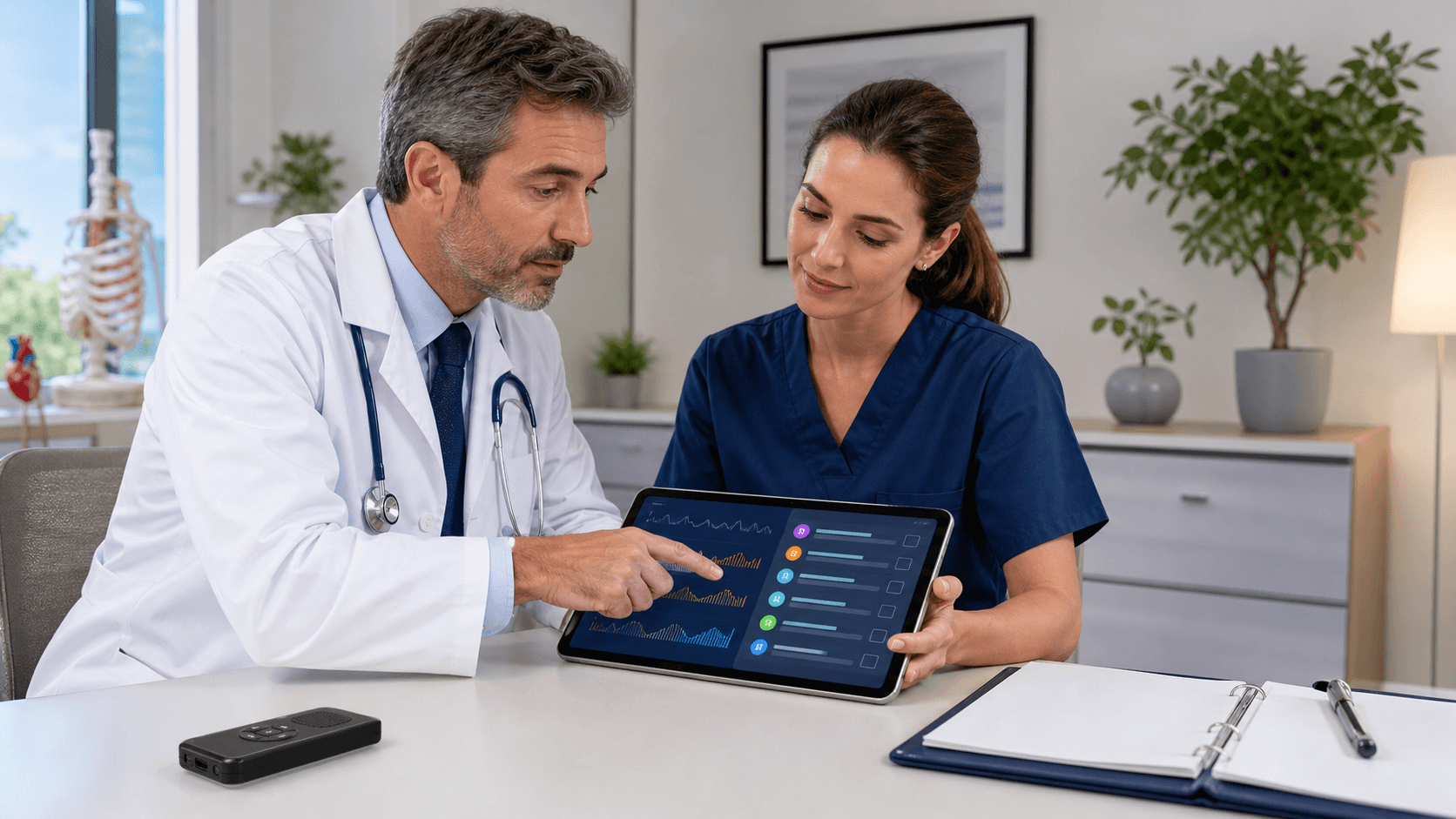
A clinical AI documentation platform shifts your focus from transcription alone to broader documentation support. The goal is not to automatically create a final clinical record without human input. Instead, AI-generated content should remain a draft that your clinicians review, correct, and approve based on their professional judgment and the details of the encounter.
Microsoft Dragon Copilot Modernizes Documentation Workflows
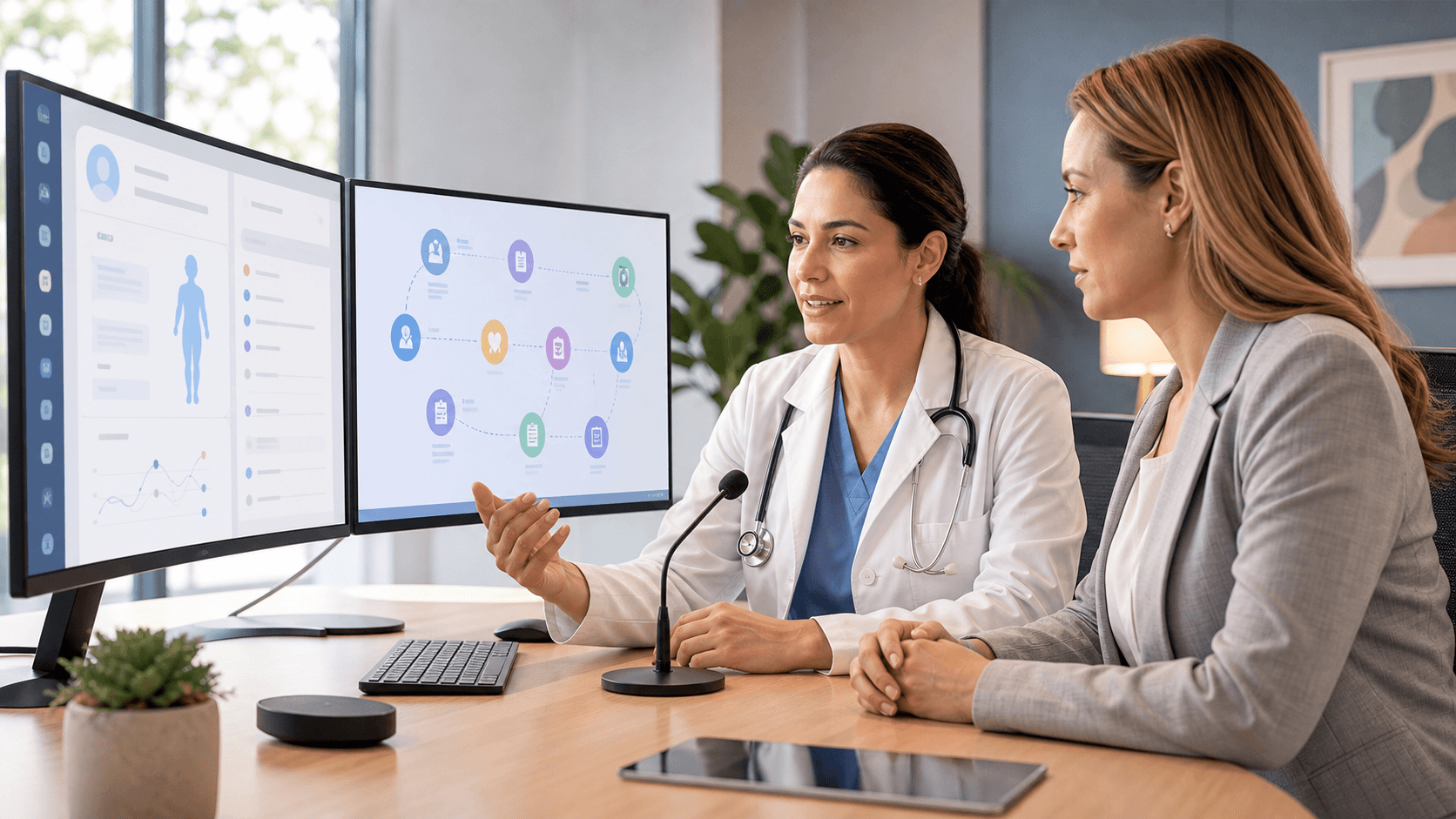
Microsoft Dragon Copilot is an AI-enabled clinical documentation solution designed to help your clinicians reduce documentation burden through voice-driven and ambient documentation workflows. It gives your clinicians more flexibility in how they capture encounter information, whether they are speaking directly to the system or documenting from a patient conversation.
The practical goal is simple: spend less effort converting conversations and observations into documentation tasks, and keep more attention on the patient in front of you. Microsoft Dragon Copilot can support a more natural process by helping turn spoken information into a draft that fits your documentation workflow.
Even with AI support, responsible use matters. Your organization needs clear expectations for how drafts are reviewed, how inaccuracies are corrected, and how documentation standards are maintained. You also need to protect patient information appropriately throughout the process.
Thoughtful workflows can include:
- Clear clinician responsibility for final note review
- Processes for correcting incomplete or inaccurate draft content
- Guidance on appropriate use during patient encounters
- Ongoing attention to privacy and documentation policies
Technology can assist your teams with the work, but it does not replace clinical judgment. The final record remains your clinician's responsibility.
Documentation Requires a Broader Compliance Context
Modernizing your documentation is one part of building a safer healthcare operation. Even a well-designed clinical AI documentation platform does not replace your need for patient privacy monitoring or drug diversion monitoring. Each area addresses a different risk, and each deserves its own workflow, oversight, and attention.
For patient privacy monitoring, we represent Haystack iS. Haystack iS helps your health system strengthen visibility into patient-record access activity and support privacy-focused oversight. It is not a note-generation platform, and you should not confuse it with clinical documentation technology. Its role is centered on helping your organization pay closer attention to access activity involving patient records.
Drug diversion monitoring is a separate patient-safety and compliance concern for your organization. DetectRx supports your health system in monitoring potential diversion-related activity. Like Haystack iS, DetectRx serves a distinct purpose and is not a clinical documentation tool.
Taken together, Microsoft Dragon Copilot, Haystack iS, and DetectRx can support different operational priorities for your organization:
- Microsoft Dragon Copilot supports your clinical documentation workflows
- Haystack iS supports your patient privacy monitoring
- DetectRx supports your drug diversion monitoring
- Each platform addresses a different part of safer care and stronger compliance
We encourage you to view these needs as connected, but not interchangeable. Better documentation, privacy oversight, and medication-related monitoring each require clear ownership and appropriate processes.
Year-End Planning Can Strengthen Safer Workflows
Late-year planning is a useful time to look closely at where documentation friction shows up for your clinical teams. You may find that the biggest burden is not speaking the note aloud, but the follow-up work required to organize, edit, review, and complete it. Those details can shape your staffing conversations, workflow planning, and technology priorities for the months ahead.
A clinical AI documentation platform can be part of your thoughtful clinical operations strategy when you pair it with clinician review, clear governance, privacy awareness, and medication-safety priorities. The strongest approach starts with the daily reality of your teams: identify where work slows down, define who owns review and oversight, and keep patient care at the center of every workflow decision.
Strengthen Documentation With Clear Clinical Oversight
At Clinical Compliance Solutions, we help healthcare teams move toward documentation workflows that support accuracy, efficiency, and clinician control. Schedule a conversation about a clinical AI documentation platform that fits your operational priorities. Our team can help you understand how Microsoft Dragon Copilot supports more streamlined clinical documentation while keeping review and governance central to the process.